To read part one of this story "The First Beginning" click here.
The first year of grad school ends. You fly home, which is in Europe. But before you fly home you tear a shoulder muscle. Never before did you suspect just how much pain one little muscle in the shoulder could hail. It's impossible to raise your arm above your head, it's impossible to sleep on your side, it's impossible to hold the steering wheel as you drive. The strange thing about that injury? There was no mechanism of injury: no fall, no strain, no sharp movement. You did nothing and then you woke up with a torn shoulder muscle. Strange.
You feel exhausted in a way you never felt before, but a lot is going on and it's too much in your character, in your matter of fact way of dealing with exhaustion, too much in your never admitted sense of pride, to carry on. Push through. Your face is swollen. You do not recognize yourself in pictures. In the morning there is the sensation of not being able to open your eyes fully. But the eyes are not swollen. If anything it seems the cheeks beneath the eyes are swollen and the eye sockets themselves have sunken. It's odd. And you still don't know how to explain this to anyone. But your body and your face remain swollen, with small fluctuations in the swelling from morning to evening. You suspect the water retention drains from your face into the rest of the body, where it is more difficult to discern as easily.
Then the worst injury happens. You tear the cartilage in your left knee. Badly.
You are running on a treadmill as you do twice every single week, as you have done for 4+ years. This time, though, you run in a pair of shoes you haven't ran in before. About 15 minutes into the run, just as you are getting going, you feel a sharp pain in your knee. You slow down. Step off. You try running again. The pain is still sharp. You could run through it, and for a minute or two you do. But it does eventually dawn on you that this may cause more damage than good, so you stop.
The pain is so intense, so exceedingly sharp, like needle through bone, you hobble around your family home, hoping, deluding yourself, it will simply go away. It does not go away. It hurts to bear weight, let alone to walk. You think you must have broken a bone. After a few weeks you go to get an ultrasound done. The doctor confirms the torn shoulder muscle, and then refers you for an MRI for the knee.
The MRI comes back with very bad news: you have torn your retropatellar cartilage and have extensive cartilage wear on your medial tibial plateau. From what? You don't know. The doctors make a point of telling you that "cartilage does not heal." And the doctor you see says you will never do anything you love. You will never ski, run, hike, climb mountains, ever again. The most you will ever do is be able to walk on a flat surface. You feel the whole world shatter around you. Literally pieces of your life, all the things you love and live for, are falling and breaking to the ground. You walk out of that doctor's appointment—late June, mid summer—on legs made of mush, crying breathlessly, crying not in the controlled mourning manner someone else may have cried, you cry with despair and terror and horror, you cry as if you just lost your life. You stagger through the streets of Baden-Baden, Germany, crying like this. Everyone is looking at you with distaste, not empathy. You want to go up to them, to say: "I just lost everything." That day you drive back home, home is in Poland, you were going to stop somewhere but you just drive. You cry every time you think of what life will now be. The darkest room takes you into itself, closes all windows, closes all doors, and you sink into the blackest shade of black you've ever known. And you do not want to be here. You do not want to do this. Not at all.
Then things get worse.
You experience a migraine with a bright shining light in your eyes. The light is there when your eyes are open and when they're closed. The migraine is very intense and you've never had a migraine before in your life. The blinding bright light terrifies you. You cannot make it go away. You panic. But at the time you think it is cardiac arrest you've gone into, because your arms go numb, left arm first, from the hand to the shoulder, then your tongue and the insides of your mouth go numb. Fully numb. And you can't talk. And you can't think. And the light is there. You close your eyes. It's there. You open them. It's there. You are trapped with this shining thing in your eye. A bright burning white light in the center of darkness. Your partner, terrified, drive you down a mountain to the emergency room, which is a good 30 minutes away but you make it there in probably 15. On the way down the mountain—it is July and all the wildflowers are in bloom—you look at the tall green grasses, the blue wild chicory, the yellow little flowers, and you feel so at peace with whatever may happen next (it is a heart attack you think you're having). The peace is eerie. The peace you feel surprises you. You look at these grasses, pausing them for a moment in freeze frame as the car speeds, madly, forward. It's been a good life, you think calmly. If it's time to go now, you will go.
It is not.
The women at the ER take you seriously, take your blood, hook you up to a heart monitor, sit beside you. You cannot say your own name. The look in your beloved partner's eyes is not a look you ever wish to see again, or one you've ever seen before. It is the "I love you, please don't die" kind of look. And if you've seen it before you know what I mean. It slams through the heart. No heart attack, the tests confirm. A panic attack? "Could a panic attack do this?" Your partner and you ask the nurses. The nurse very kindly, very humanly, very empathetically, answers: "yes, it could." You stay in the ER for 8 hours in total. You are being monitored, just in case. You return home a little bewildered, a little humiliated, a little terrified of yourself. This suddenly unpredictable body you find yourself in.
What is happening? You want to, and don't, know.
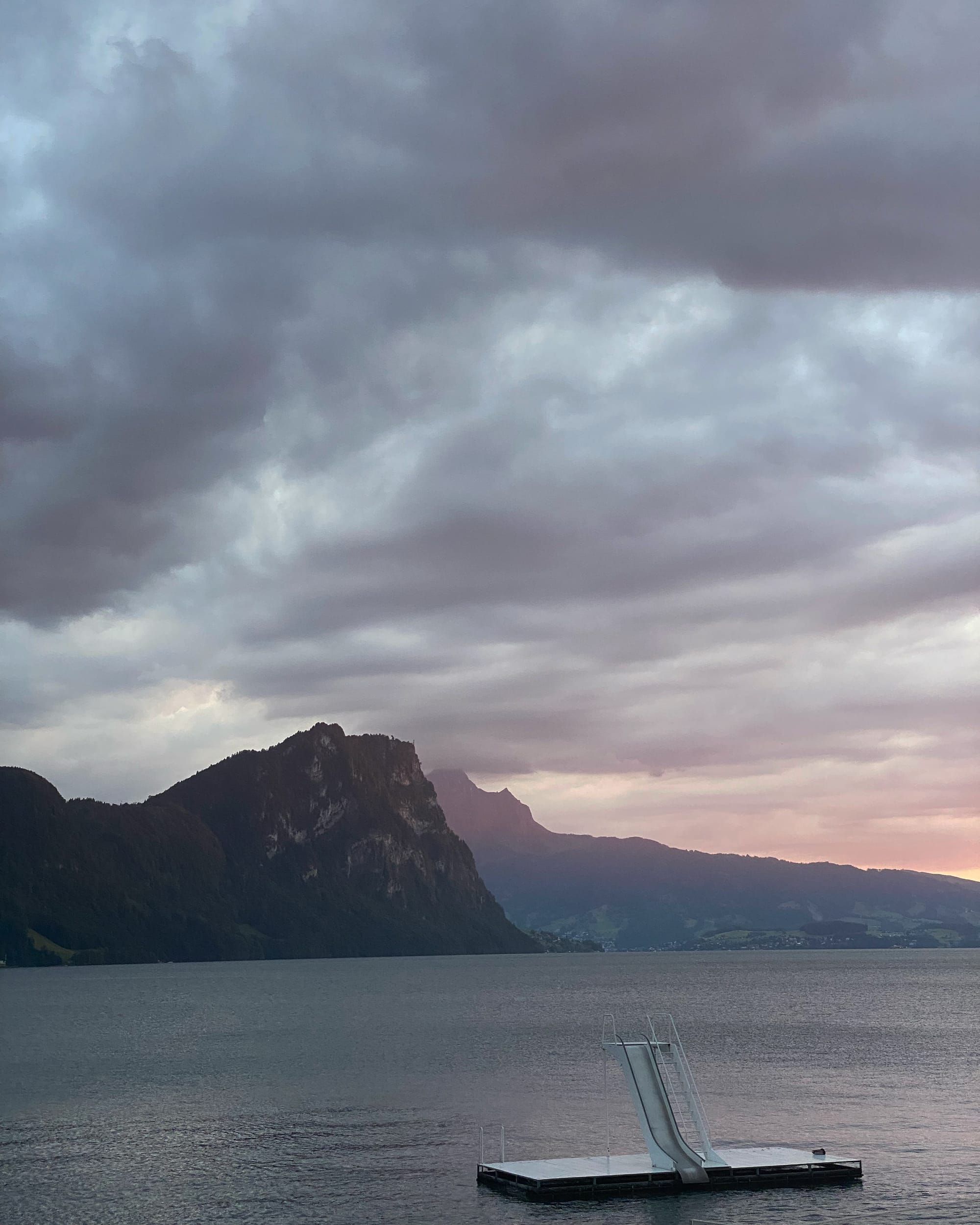
The migraines carry on, but the blinding white light does not come back and for this you are grateful. Summer carries on. Your body feels wrong, feels like it is suddenly 80 years old. How else to explain it? You are made of lead, heavy stone, you are not a body of soft tissue, flowing blood, malleable tendon, glowing bone, you are a slab of marble: difficult to move, painful at every turn, not your own, and not your self.
You sink, what rises all around you is a depression—a net cast, weighed on each side with stones. It takes you down. Numb, exhausted, going from headache to headache, from pain to pain, your thoughts stop their natural patterns. Have you mentioned yet that you're a writer? The stories you weave and naturally track through your mind as you're doing whatever you're doing during the day—they stop. Your thoughts seem suspended in thick, black oil. You unbecome yourself. And feel dispossessed by something you cannot name, something you do not yet know, cannot yet see for it is too close, too close to discern any difference between yourself and it.
Everything comes to a terrible trough on a windy mountain road. You and your wonderful partner are killing time before an appointment at a clinic. You decide to drive up the mountain, see a small town, why not? You go. The road is windy, looping its exaggerated serpentine between steep hillsides. Your elbows hurt. Your elbows hurt like someone driving icepicks through the joint. "Stop," you say, "stop the car please." He stops. You grab at your elbows, at the pain that should not be there. A pain you've never had before. Osteoarthritis? Sudden onset? At 28? You feel as if you've been taken away on the tide of some dark terrible wave, which is now bearing you away from the familiar shores of your life, your body, and what you understood and trusted to be your own being. You are now on a journey you never wished to take, upon seas you've never known to exist, darker and more tempest than anything you've known.
"Good luck."


Let me tell you a story...
It is spring, 2022. The year could have been any other year, except it isn't. It's this year and you are twenty-eight. You are at the Masters program you have wanted, and spent years dreaming, to attend. You feel that life is about to start, that everything before this may have just been a rehearsal. You are full of optimism and hope. Your true life, so long awaited, so ardently imagined, is about to begin. At last. But that is not the whole truth. The truth is that you are far away from all that feels like home, in a small remote American town, far away from anyone or anything that is familiar. The truth is you are exhausted. The truth is you are stressed. The truth is you are alone.
It begins all at once. Is how it seems at first. Except that everything has a beginning long before it actually begins. And those pre-beginnings, those ineffable starts, were this: stomach pains. But you are in a Masters program and in this particular small American town drinking seems to be the only available past time, so you blame the beer. You blame beer. You drink maybe 3-6 beers a week. And you think that is what is making your stomach hurt, bloat, feel like a rock. But it is not.
That was the first sign. Small. Irritable. Not insurmountable. Small enough to ignore. And anyway, are you not at grad school? Are you not supposed to be socializing, making friends, meeting people? Beer isn't great for you. You know this. You don't even particularly love beer, but in the ramshackle (and that's being kind) despair of the rundown bars your peers attend is the only beverage they serve. You should slow down. And you do. In fact, you stop drinking all together.
Winter break. A near death experience occurs (another story). Family stress. Skiing long hours. Conflict. Stress.
You are back. Grad school: semester two. You are jet-lagged. You are tired. Stomach pains continue. Then it becomes March. Spring break. Your face starts to swell.
Symptom #1: your face starts to swell. And you don't know why.
For spring break you travel to a small coastal town: sun, agave, the Pacific. You go out for tacos and afterward your stomach hurts as it has never hurt before. You stagger back to the hotel, bent over, thinking maybe you really need to go to the hospital, maybe your appendix burst, maybe worse. The pain feels abnormal. Your stomach bloats to a full 9-months pregnant type of situation, and you barely make it back to the hotel, but then you do. The pain is not fully gone by next morning. When you speak to your friend you guess it may be lactose intolerance manifesting with considerable delay, now, as you are twenty-eight. You know that American dairy is frequently more troublesome than European (Europe, where you're from), so you avoid dairy for the rest of Spring break. But the stomach problems persist.
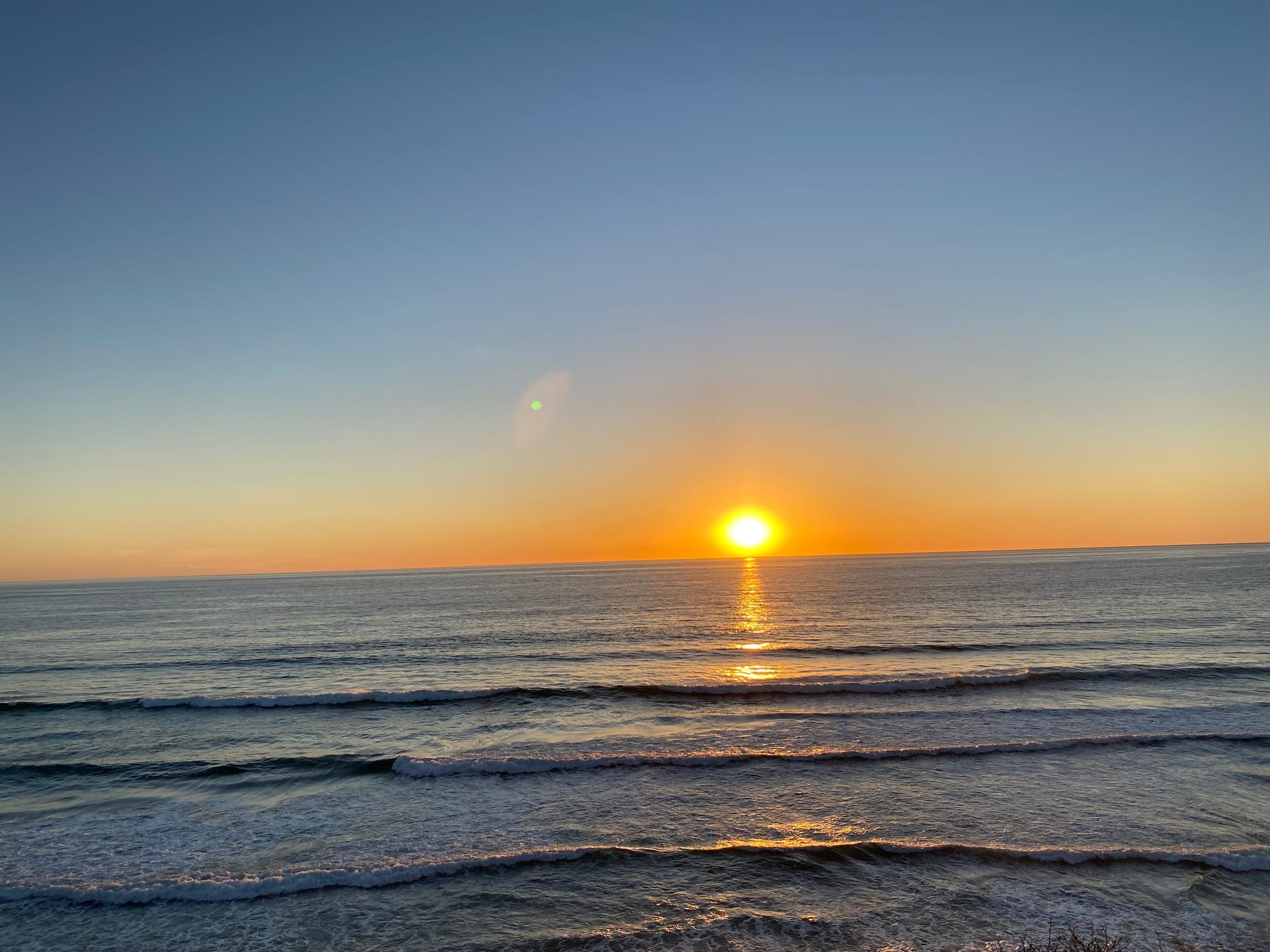
In the mirror you do not look like yourself. There is a layer of swelling on your face that effaces the cheekbones and whatever natural slenderness your face usually possessed. The swelling now makes it into something strange. Your whole body though—your whole body looks as if you've gained weight. (Symptom #2: full body water retention/swelling) But it is not fat. You know because you've have had several bodily adventures and you are usually able to tell when you start to put on weight, rather than see it all at once manifest as you are seeing it now. You reprimand yourself: stop overeating. You become cruel. Far, far crueler than this: You fat monster. You disgusting thing. You can't bear to look at yourself. Take another picture, you say as you give the camera away. It is so beautiful here, in Encinitas. The red sun delves into the slow carpet-like unfolding procession of the tides: red into blue, and you cannot bear it. Agonized by what is happening to you. And as far as you can tell then: nothing is happening to you. It is your fault. It is your fault. It is all your fault.
Bear it.
You do not know what this is, even though around the narrow edges of the brutalizing voice there is another, a fainter, subtler voice—and it is saying: something is beginning, something terrible is happening to you.
This is the beginning of crisis.
This is the first week in which the symptoms become undeniable. Your past self, the self you assumed you were disappears, and you feel like you've awoken in a strange body, been kidnapped into fairytale logic, turned into a werewolf at night, for the swelling is worst in the morning. You feel like Gregor Samsa: you've been turned into a vermin. You used to be human and now you're something else. That is to say: you used to be yourself, now you're not.
What are you? What is happening?
This is a blog about things falling apart. And things are now falling apart.
You see the world, agonizingly beautiful and you cannot touch it. You begin to feel other to it. You begin to resent yourself, as if, as if, it is you who is causing this. As if it is within your will and within your power to make this swelling, this stomach pain go away.
It is necessary to point out that back then you did not see a link between the swelling and the stomach pain. Back then you were too preoccupied by silently abusing yourself for carelessly gaining weight, after you had been in the best shape of your life the past winter. What a disaster.
You return to your Masters program, to grad school, and its snow-laden, lead-like small American town. You pass twenty-four casinos on your drive to class. Your classmates make this out to be quaint, cute, amusing. You see: addiction, power abuse, poverty. It makes you feel extraordinarily sad. You bite your tongue.
By the time classes end you cannot fit into any of your jeans, so you wear dresses. It is May. You are swollen every day. You do not resemble yourself. And you can't figure it out for the life of you why. There is no trigger—like food, or a material, or a chemical. You feel ashamed. You feel inwardly vexed. Tossed into a battle between your own body and your own self. The self you have known yourself to be. But now—now, what is this? What is happening? Nothing you try makes the swelling go away. Not cutting gluten, not cutting dairy, not eating less. Your face appears disfigured in the mornings, and the swelling goes down slightly as the day goes on. But it never completely disappears. Your face is swelling and you don't know why. Why is my face swelling? You want and do not scream.
You walk around like an unstitched wound, ashamed, raw, bleeding pain. Soundlessly screaming. You do what you always do when you are in extraordinary pain: you deal with it alone.
And so you torture yourself. Endlessly struggle with an invincible opponent.
The semester ends. You are full of shame at how you look, full of contempt, you can do nothing about it, and you worry you will stay like this forever, that you will never be your true self ever again. You fear you have flown too close to the sun. You fear this is some retribution for getting dangerously close to the things you wanted.
The things you thought you wanted.

This is Deep Matter, a brand new site by Ania that's just getting started. Things will be up and running here shortly, but you can subscribe in the meantime if you'd like to stay up to date and receive emails when new content is published!
